How Competitive SEO Analysis Reveals Where Your Strategy Falls Short
Years ago, I watched a client pour budget into link building while their top competitor quietly swept the SERPs with nothing but solid on-page optimization and a handful of guest posts. The client had good content, a decent domain authority, and a functional site. But they were guessing. They had never done a proper competitive seo analysis. That single blind spot cost them months of effort and a pile of cash that could have been spent more effectively.
Competitive seo analysis is not about copying what others do. It is about understanding why they rank where they do and figuring out what you can do better. Done right, it saves time, reduces guesswork, and surfaces opportunities that are hiding in plain sight. The hard part is knowing where to look and how to separate signal from noise.
Start with the SERP Landscape
The first thing I do when I sit down to study a market is open the search results for the core terms I care about. I look at the top ten or twenty results and note what type of content is ranking. Are they blog posts, product pages, listicles, or video results? Is Google showing a featured snippet, a People Also Ask box, or a knowledge panel? These SERP features tell you what Google thinks the user wants. If your competitor owns the featured snippet for a high-volume query, that is a signal they are answering the question better than you are.
Tools like Semrush and Ahrefs make this kind of reconnaissance fast. You can plug in any domain and see which queries drive their traffic, what their top pages are, and how their rankings have shifted over time. But I caution against relying solely on aggregated metrics. A domain authority score from Moz or a page authority number from MozBar gives you a rough sense of strength, but it does not tell you why a specific page outranks yours. You need to look at the actual content, the backlinks pointing to that page, and the user experience signals like load speed and mobile readability.
Keyword Gap Analysis and Content Gap Analysis
One of the most practical exercises in competitive seo analysis is keyword gap analysis. You take your domain and a couple of competitors, run them through a tool, and see which keywords the competitors rank for that you do not. The results can be humbling. I once did this for a mid-size ecommerce brand and found they were missing over two hundred relevant terms that their closest rival ranked for. Many of those terms had decent search volume and low difficulty. The client had simply never thought to target them because they were too focused on the head terms.
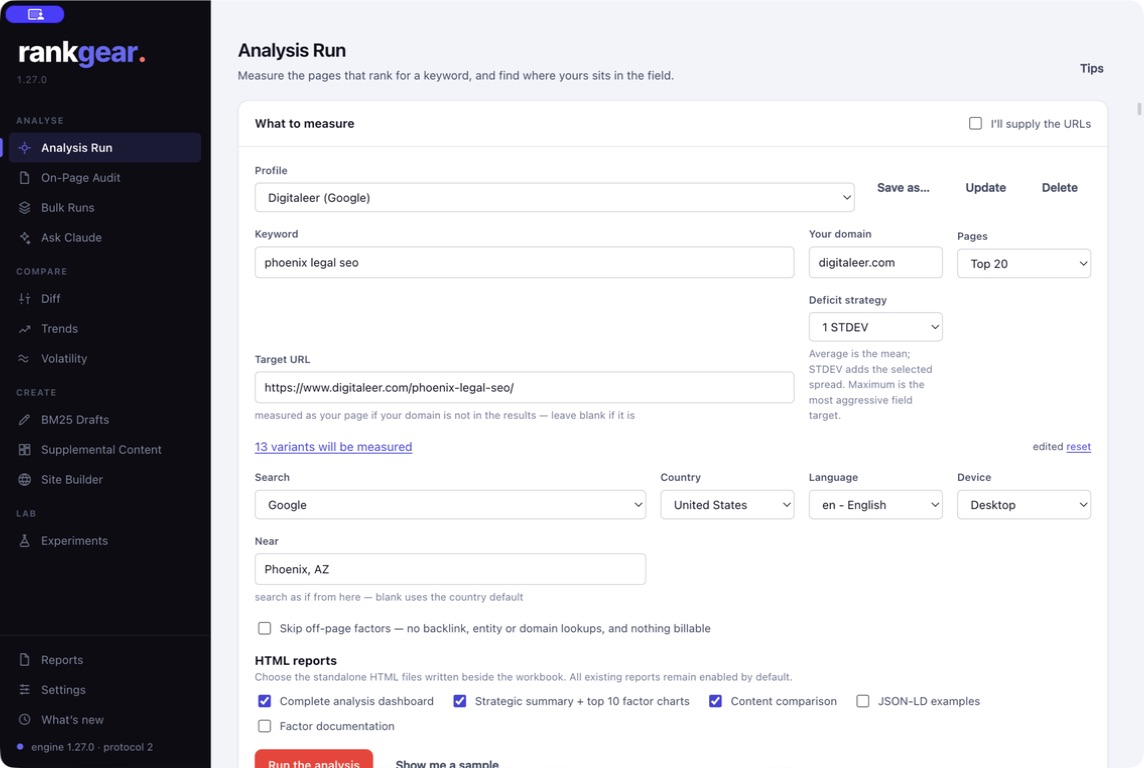
Content gap analysis takes that a step further. Instead of just looking at keywords, you examine the actual topics and formats your competitors cover. Maybe they have a guide, a calculator, or a comparison table that you lack. Maybe they publish data studies or interviews. You can use Screaming Frog to crawl their site structure and see how they organize information. You can pair that with Google Search Console data to see which of your own pages are underperforming and where you might fill a gap.
The goal is not to replicate their content. It is to identify themes you have neglected and find angles where you can offer something more useful or more current. If every competitor has a stale article on the same topic, you can write a better one. That is where real gains come from.
Backlink Profile and Domain Authority
Backlinks still matter, but the way they matter has changed. A single link from a highly relevant, authoritative site can do more for your rankings than dozens of low-quality directory links. When I look at a competitor's backlink profile, I focus on the quality of their referring domains first. I use Ahrefs or Moz to sort their links by domain authority and then look at the context. Who is linking to them and why? If a well-known industry publication links to their guide, that is a signal their content earns trust.
I also check their anchor text distribution. If most of their links use branded or generic anchors, that is natural. If they have a high percentage of exact-match anchors, they might be buying links or engaging in aggressive outreach. That is a risk you probably do not want to copy. On the other hand, if you see a competitor with a strong backlink profile and you have none of those same referring domains, that is a clear opportunity. You can reach out to those sites with a better resource or a fresh take.
Competitor Benchmarking and Organic CTR
Competitor benchmarking is where you track your performance against a set of rivals over time. I set up a monthly report in Google Analytics and Google Search Console to monitor changes in organic traffic, average position, and click-through rate. I also track SERP features because a featured snippet can dramatically alter organic CTR. If a competitor suddenly gains a snippet for a term you both target, your click-through rate will drop even if your ranking stays the same.
I remember a case where a site lost half its traffic to a single query because a competitor added a table of contents with jump links that Google turned into a featured snippet. The competitor did not write better content. They just structured it in a way that Google could easily extract. That is the kind of insight you only get when you regularly compare your organic CTR against theirs.
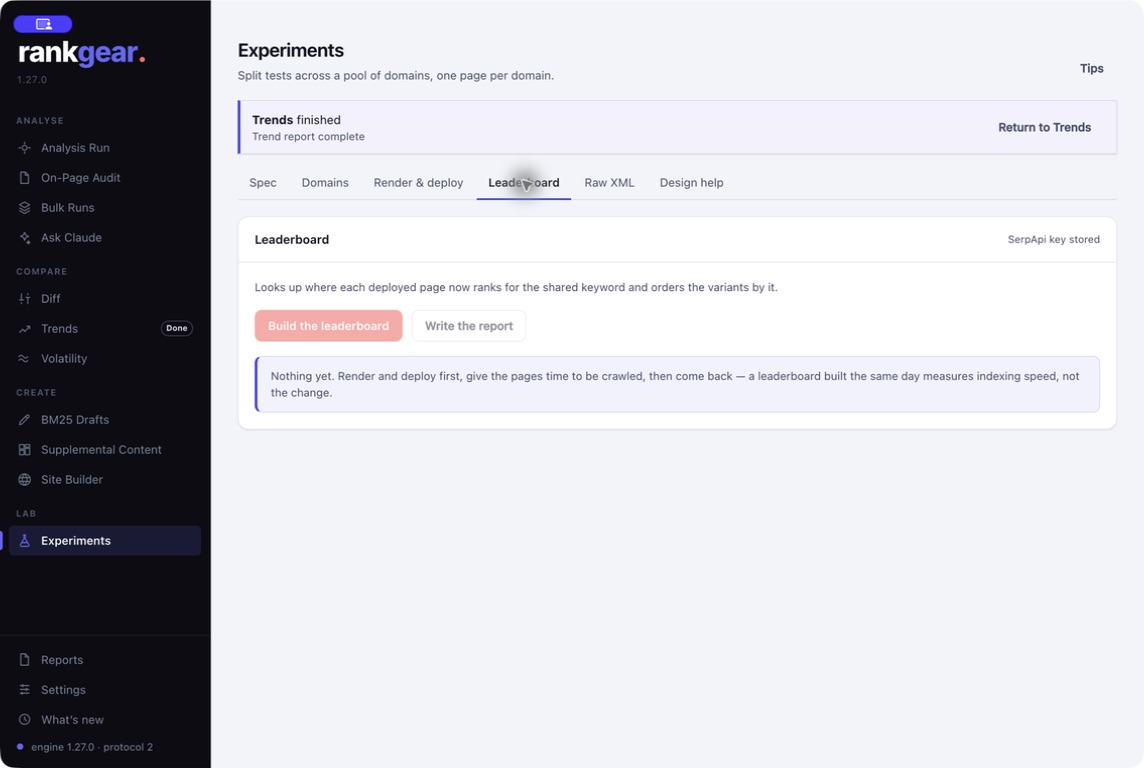
Google Trends can help you see whether a topic is rising or fading, but it is not a substitute for real search volume data. I use Google Keyword Planner to estimate volume and seasonality, then cross-reference that with actual traffic data from my own site and the competitors I track. If a competitor's traffic for a term spikes in a certain month, I want to know why. Did they update a page? Did they earn a new link? Did they publish a piece of content that went viral? The answer often reveals a tactic you can adapt.
On-Page Optimization and Technical Details
On-page optimization is the low-hanging fruit that many people overlook when they are obsessed with link building. Run a competitor's page through a tool like Screaming Frog or even just view the source. Look at their title tags, meta descriptions, heading structure, and internal linking. Are they using the exact keyword in the H1? Do they have a clear hierarchy of information? Is their page loading quickly on mobile?
I once audited a competitor who outranked us on a key term. Their content was not as thorough as ours, and their backlink profile was weaker. But their page loaded in under two seconds while ours took nearly four. They also had a prominent table of contents that linked to each section. That combination gave them a better user experience and a higher dwell time. We fixed our load speed, added a table of contents, and within six weeks we had overtaken them. The lesson was that competitive seo analysis should always include a technical comparison, not just a content one.
Tools of the Trade
I have used most of the major tools at different points, and each has strengths. Semrush and Ahrefs are both excellent for keyword research and backlink analysis. Moz offers a solid domain authority metric and the MozBar browser extension is handy for quick checks. Google Search Console and Google Analytics are free and give you first-party data that no third-party tool can match. Screaming Frog is indispensable for crawling sites and finding technical issues. PageRank is not what it used to be, but understanding the concept of link equity still helps when you evaluate a competitor's authority.
I rarely rely on a single tool. I cross-reference data from at least two sources. If Semrush says a competitor has fifty referring domains and Ahrefs says they have eighty, I dig deeper to understand the discrepancy. Maybe one tool is picking up more spam links or missing some high-quality ones. The point is to use the tools as guides, not oracles.
Putting It All Together
Competitive seo analysis is not a one-time project. It is a habit. Markets shift, competitors change their strategies, and Google updates its algorithms. What worked six months ago might not work today. I set aside a few hours each month to run through my process: check the SERPs, update the keyword gap report, review the backlink profiles, and look at the technical health of my site compared to the top players. I keep a simple spreadsheet where I track a handful of key metrics for each competitor. Over time, patterns emerge.
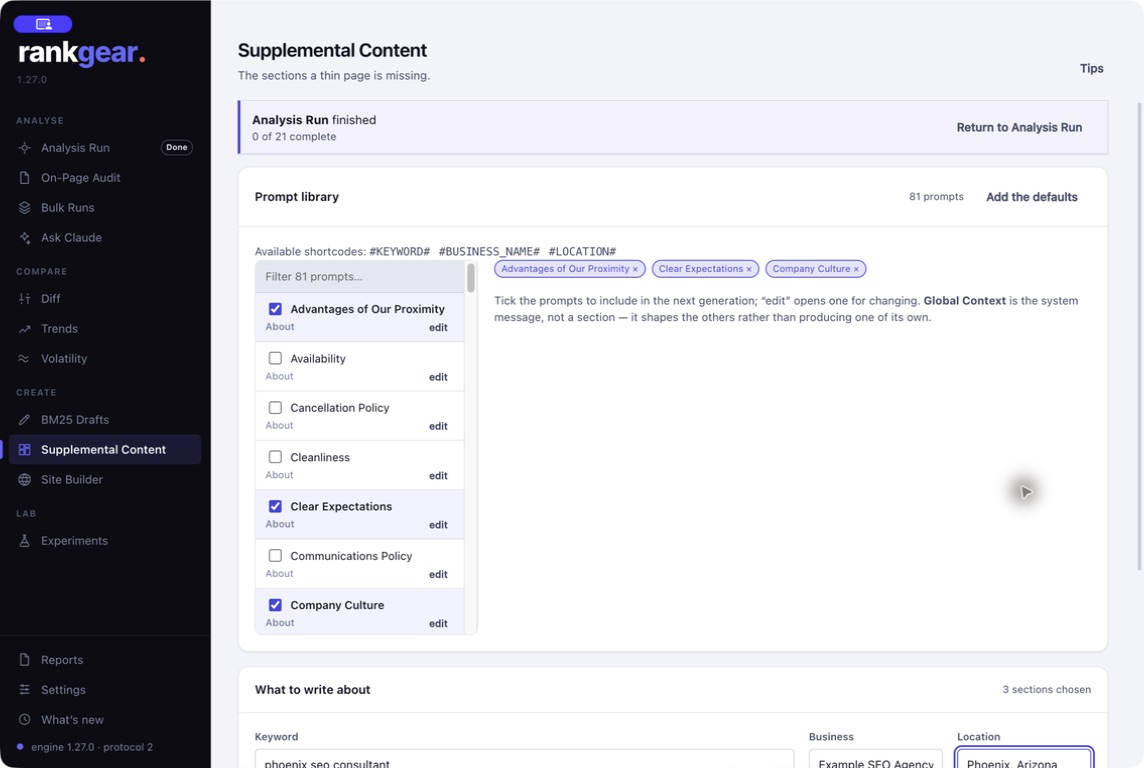
If you are just starting, pick three competitors that are slightly ahead of you. Do not chase the market leader right away. Focus on the ones you can realistically catch. Do a thorough competitive seo analysis of their strongest pages. Figure out what they do well and where they are vulnerable. Then make a plan to outflank them. That targeted approach will give you better returns than trying to boil the ocean.
In the end, the point is not to obsess over every move your rivals make. It is to stay informed enough that you never get blindsided. The web is littered with sites that were once at the top and then vanished because they stopped paying attention. Competitive seo analysis is the insurance policy that keeps you from becoming one of them.
Corrections
Spot something wrong? Send it to the desk and it gets fixed in the open.